

How to Plan a Trip Without AI (This Way is So Much Better)
If you’re wondering how to plan a trip in a safe and reliable way, then I hate to break it to you – those Chat GPT itineraries you whipped up in under a minute? They’re most likely garbage.
It’s never been easier to generate an itinerary in seconds, and while it seems incredibly efficient and exciting, the reality is oftentimes far from that. This is why you need to stop relying on AI to solve all of your travel ventures, and actually just learn how to plan a trip yourself (or let the professionals plan your trip).
In this guide, we’re breaking down how to plan a trip yourself, step-by-step, so your itinerary actually works once you arrive. We’re also including special tips for when you should (or should not) rely on AI, so that you can use the tools available, without relying on them completely.
Want to save this article for later? Pin it!

*Please note that this blog post may contain some affiliate links, which we make a small profit on, at zero cost to you. Links are only used on products & services that we’ve used and believe in, to give you the best buying experience. Purchasing from these links helps us to continue providing free travel guides for you- so thank you for your support!
Our Travel Planning Recommendations
Why You Should Plan a Trip Without AI
Before diving into all of the details for how to plan a trip on your own – it’s important that you understand why AI isn’t the best option for planning your trip.
When people search how to plan a trip, they often want something quick and efficient. AI tools can generate full itineraries in seconds, but speed doesn’t guarantee accuracy. Here’s what’s wrong with relying on Chat to do all of your work for you.
👵🏻 AI Pulls From Outdated and Mixed Sources
AI aggregates information from across the web, but it doesn’t prioritize what was updated yesterday versus what was written years ago. This means that oftentimes you’ll be given recommendations of places that have changed their timetable, or maybe that don’t even exist at all.
This is super risky when planning your trip itinerary!
🔍 Case in Point
We did a test for this hypothesis when we went to Paracas National Reserve. We visited in 2019 and again in 2025. Routes and access points changed between those visits greatly, and when we showed up, the information that Chat GPT had spit out was laughable. It had us visiting the park outside opening hours, and visiting things that were blocked off.
We then updated our guide to have ALL of the up-to-date info. But since we are just one small travel site, it didn’t make a difference in the results Chat GPT gave. AI tools were still presenting outdated logistics because they pull broadly rather than verifying recency.
If you’re looking to plan a trip without hiccups, the first step is fact-checking. Never rely on AI, because outdated details can ruin your entire schedule.



🗺 AI Doesn’t Understand Real-World Context
AI may suggest places that technically exist but don’t make sense within a real itinerary. Furthermore, it can romanticize places and make them seem like something they’re actually not.
Planning a trip requires context, not just data. AI may tell you to visit certain places in your itinerary without realizing that they’re nowhere near one another, or have difficult connections.
🔍 Case in Point
We ran another test: “Chat, I’m planning a trip to Argentina – where should I go?”. You should have seen the look on our faces when we got our recommendation. LA PAMPA.
If you’re Argentinian you know this is the most absurd recommendation because there is literally nothing but fields of grass there. That’s like sending a tourist visiting the US for the first time to Kansas. Seriously?
I don’t know about you – but if I was spending all that time and money to cross the globe I wouldn’t want to end up wasting it on a place AI randomly put a glamorous spin on.
👩🏻💻 AI Should Never Replace Official Sources
When it comes to visas, entry requirements, safety updates, or restricted areas, AI should never be your primary source. While it gathers information across various sources, it doesn’t actually verify what’s the most recent. And we all know that visa requirements change very fast with this crazy world we are living in.
If you’re serious about how to plan a trip responsibly, always verify important information directly through official government websites. Travel planning isn’t the place to rely on summaries, and we’ve actually seen it ruin our friend’s trip!
🔍 Case in Point
Our friends are from Argentina, and asked Chat GPT if they needed a visa to travel to Puerto Rico. “Puerto Rico is its own island, and you do not need a visa for Puerto Rico.”
As an American-Argentinian couple you can only imagine the look on our faces when they told us this story. OF COURSE you need a visa – it’s part of the US! (All Argentinians need visas to visit the US).
Well, they got turned away and wasted a ton of time and money to completely miss their entire trip.

How to Plan a Trip Without AI: Step-by-Step Guide
Now that you know why you shouldn’t 100% plan a trip with AI, it’s time for the fun part! Here is our step-by-step itinerary making process – without the use of Chat GPT.
🗺 Step 1: Create Your Map First
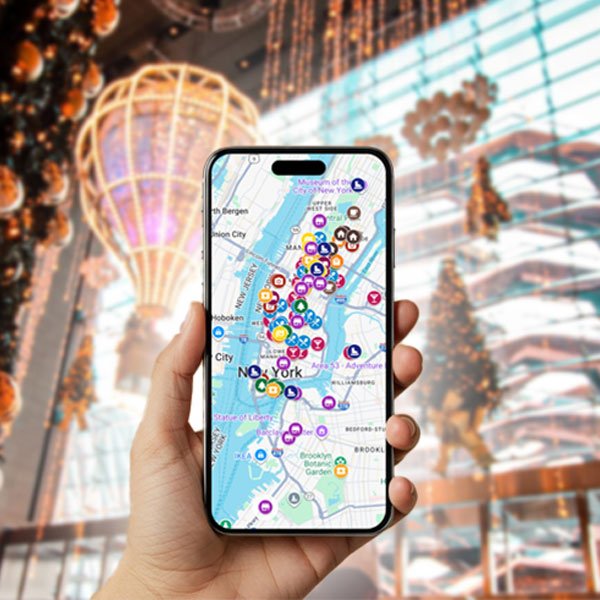
The first step in starting to plan a trip is mapping everything out visually. Using Google Maps to create an itinerary is easy, fun, and makes planning much more organized and realistic. This will help you visualize everything and group activities logically by neighborhood.
We go over this entire process with our dedicated guide!

How to Plan an Itinerary with Google Maps – Our Favorite Travel Method!
Plan an itinerary with Google Maps in the best way possible. This guide will help maximize and efficiently create your trip.
🚌 Step 2: Choose Your Mode of Transportation Early
Transportation is one of the number one ways to determine what’s realistic in your trip, and how much you can fit in. Public transport, guided tours, and road trips all create different timing structures, and will also affect your budget.
When learning how to plan a trip efficiently, your transportation choice should shape your itinerary, not the other way around.
Once you know how you’re going to get around, you can start to see how far distances are and the amount of time to give yourself. If you’re using public transportation it’s also important to check schedules so you don’t accidentally plan outside operating hours.

🔤 Step 3: Use the ABC Method to Prioritize
Not everything belongs on your final schedule. Create an A list for must-see experiences, a B list for strong interests, and a C list for optional stops. We talked more about this in our previous podcast, but basically it’s all about prioritizing your top choice and then fitting in other activities if there’s extra time.
This method is one of the most effective ways to plan a trip without feeling overwhelmed or disappointed.
🥪 Step 4: Use the Sandwich Strategy for Daily Flow
Decide where you want to start and finish each day before filling in the middle. A sunrise viewpoint and sunset dinner location can anchor your day naturally. Then you’ll just need to fill. in the blanks! Always make sure to prioritize those A activities, and use them as anchors throughout the day as well.
This approach makes learning how to plan a trip much easier because it builds structure without over-scheduling. It also lets you add on extra things that are nice if you have more time.

⏳ Step 5: Always Add Buffer Time
The most common mistake people make when planning a trip is underestimating how long things take. Hikes run longer. Restaurants move slower. Transportation gets delayed. Maybe you met a stranger and had. along conversation, or maybe they told you about a really cool gem that wasn’t on your itinerary.
Leaving buffer time allows for spontaneity, and also protects your itinerary from falling apart.
📝 Step 6: Use Google Reviews to Adjust Your Plans
Google Reviews are key when you plan a trip. Why exactly? It’s not to know whether a place is good or not – it’s to get real-time details for places. Reviews reveal realistic timing and seasonal advice, particularly for activities.
We do this for most places, but also especially for hikes. Travelers frequently mention how long a hike actually took, the best time of day to visit, or the condition of the trail. Sorting by recent reviews is essential, and can help you plan your trip more efficiently, without surprises.

🎟 Step 7: Book High-Demand Experiences First
Some attractions require advance booking, and availability can oftentimes dictate your schedule. If you’re booking tickets for Machu Picchu for example, you may see that the specific trail you want to take is only available certain days.
It’s important that you, first-and-foremost, book these tickets. Once you have your main activities booked, you can then plan your trip around them.



🅱️ Step 8: Build a Plan B
Weather changes, closures happen, and transportation plans shift. Having a backup option nearby keeps your day flexible, and will help you be proactive rather than reactive. Read articles like “things to do in Cappadocia when it rains” and make a list of secondary activities you can do if the weather isn’t in your favor.
The most important thing to keep in mind when you plan a trip is that nothing can be planned to perfection 100% of the time. Flexibility is key, and having extra time in your itinerary or activities planned will turn your trip from a disaster to a simple shift.


When AI Can Be Helpful While Planning a Trip
AI can be useful during the early brainstorming stage of how to plan a trip. It’s helpful for generating general destination ideas, comparing travel styles, or organizing broad research notes.
Where it should not be relied on is anything time-sensitive, location-specific, or logistically important. Opening hours change, routes close, entry systems update, and transportation schedules shift. Those details require verification through official websites, recent reviews, and up-to-date local sources.
If you choose to use AI while planning a trip, use it as a research assistant, not as your final authority. The real work of how to plan a trip properly still comes from mapping routes, checking official information, and building a realistic schedule yourself.
How to Plan a Trip Without AI: Final Thoughts & What’s Next
While AI can gather information across the web quickly, it doesn’t always understand what’s outdated, closed, or simply incorrect. That gap between information and real-life logistics is where trips start to fall apart – like arriving in a destination Chat GPT said you didn’t need a visa for when *in fact* you DO.
Learning how to plan a trip yourself gives you better control over timing, logistics, and expectations. It allows you to build something realistic instead of relying on generalized data.
AI can support your research, but thoughtful planning, updated sources, and real traveler feedback will always create a stronger itinerary.
Liked this article and want to save it for later? Pin it!

👀 What’s Next?
Now that you know how to plan a trip without having to use AI, let’s help you with the rest of your travel planning.
Here are some other articles we have to help you be a better traveler:
✈️ 3 Easiest hacks for booking flights
📆 When to buy your flight
🤑 Flight hacking for beginners
📆 How to plan your 2026 travels
🤑 How to visit expensive destinations on a budget
🍃 30 Ways to become a more eco-friendly traveler
🛌 How to find unique stays
🗺 How to create an itinerary with Google Maps
📲 10 Travel apps that will save you time and money
📝 10 Travel essentials you didn’t know you needed
🧳 28 Life-changing packing tips
🎒 Top 6 backpacks for travelers
💻 Strategies for booking your trip
👩🏻💻 10 Tips for working remotely while traveling




So are you ready to start planning your trip without relying on Chat GPT? We hope that this guide has helped you organize yourself and makes you confident in your own skills over a computer’s.
Want some other life-changing travel tips? Don’t miss out on our other travel planning and packing guides. Also, don’t forget to subscribe to our newsletter to receive our weekly article updates, and get exclusive discounts on our shop!
Still feeling overwhelmed with it all? We can plan your trip for you, or you can sign up for a one-on-one consultation where we spend quality time with you to guide you through everything.

Here are some other articles you’ll love: