If you’re planning a trip to Jeju, South Korea, this Jeju travel guide will help you navigate one of the country’s most unique destinations.
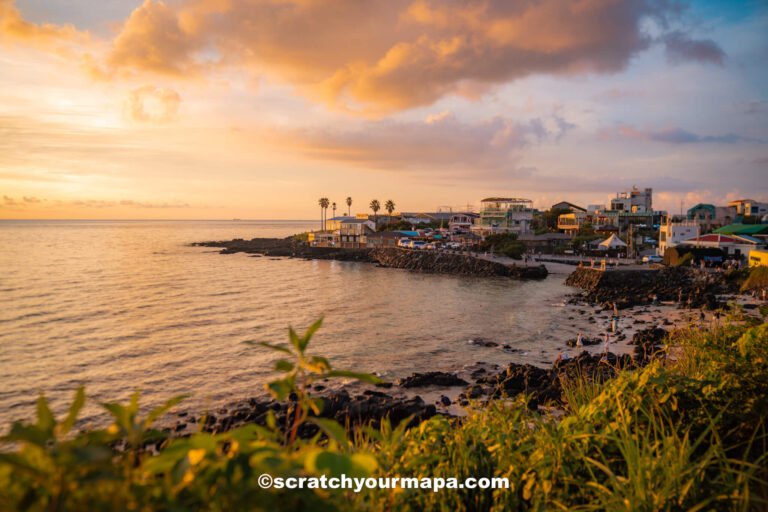
This island is where dramatic volcanic landscapes meet charming coastal towns and where you’ll find some of the best food in the country. From wild coastlines and lava tubes to beach cafés and waterfalls, Jeju feels completely different from the mainland, and is full of surprises.
*Please note that this blog post may contain some affiliate links, which we make a small profit on, at zero cost to you. Links are only used on products & services that we’ve used and believe in, to give you the best buying experience. Purchasing from these links helps us to continue providing free travel guides for you- so thank you for your support!
Visiting Jeju is such a treat, and there is so much to know before planning your trip. But before we dive into the top sights, food, and where to stay, we’re going to start our Jeju travel guide with what makes Jeju so special, and why it’s one of the most beloved destinations in Korea.
⭐️ What is Jeju Famous For?
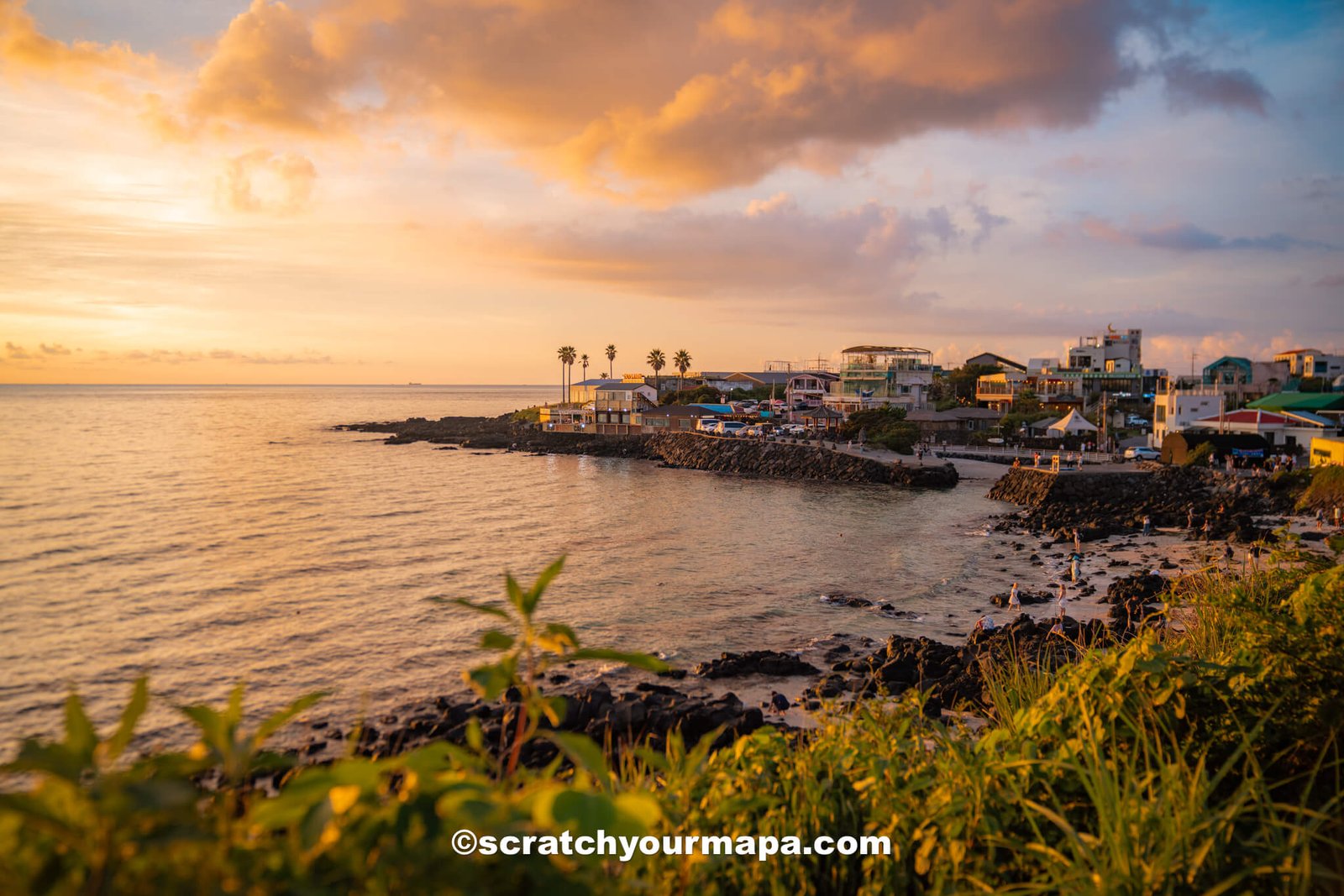
Jeju is famous for its volcanic landscapes, beautiful beaches, fresh seafood, Hallasan Mountain, tangerines, green tea fields, and unique local culture. When exploring the island using this Jeju travel guide, you can enjoy everything from stunning waterfalls and hiking trails to cozy cafés and coastal viewpoints.
🤠 Is Jeju Good for Tourists?
Jeju is one of the most popular destinations in Korea and is fantastic for tourists. From relaxing beach days and scenic drives to fresh seafood, tea plantations, and iconic hikes, there is truly something for everyone.
Whether you’re visiting for nature, food, or a peaceful escape from the cities of South Korea, Jeju is absolutely worth the trip, and this guide will help you plan an unforgettable visit.
📍 Where is Jeju in South Korea?
Jeju is located off the southern coast of the Korean Peninsula, surrounded by the East China Sea. The island sits about a 1-hour flight from Seoul, Busan, and Daegu, making it incredibly easy to reach from anywhere in the country.
Jeju is well connected and simple to navigate, making it the perfect starting point for a relaxing island getaway.
Jeju Travel Guide: Getting There
Now that you know where Jeju is, the next part of our Jeju travel guide is to help get you there!
By looking at the map, Jeju may seem remote. It is a volcanic island off the southern coast of Korea, and the only way to get there is by flying or sailing. Even so, getting to Jeju is actually very simple, with plenty of options depending on where you are coming from.
Here are the different ways to get to Jeju, South Korea:
Fly to Jeju International Airport
Take a domestic flight from Seoul, Busan, Daegu, or other Korean cities
Take a ferry to Jeju from several ports on the mainland
Rent a car on the mainland and bring it on the ferry
Join a guided tour that includes transportation to Jeju
Want to learn more details about each option for getting to Jeju? We have a separate guide for how to get to Jeju, which compares all of the options and shares detailed information.
How to Get to Jeju Island, South Korea: Transportation Options & Entry Requirements
In this guide, we’ll break down exactly how to get to Jeju Island no matter where you’re coming from, along with visa details and other helpful info.
Now that you know how to get to Jeju in terms of transportation options, let’s look at what else you will need to enter South Korea before starting your island adventure.
🛂 Visa Requirements
The first time I traveled to Korea, I was surprised by how the entry rules changed depending on your nationality. At one point the K-ETA (Korea Electronic Travel Authorization) was required for almost everyone, and it felt like such a hassle to get. It also used to be pretty expensive. These days the rules are much more relaxed, especially for American travelers.
South Korea does not currently require proof of any vaccination to enter the country.
Are you in a rush?
Get got you! Save it on Pinterest to read it later.
Save to Pinterest
Jeju Travel Guide: Local Adjustments
If you are visiting Jeju for the first time, you will notice several things that are different than home such as the language, currency, and tipping culture. These tips will help you feel more prepared as you explore the island, and they’re key items of this Jeju travel guide for helping you adjust to a new destination.
🗣 What is the Main Language Spoken in Jeju?
The official language on Jeju Island is Korean. Jeju also has its own local dialect called Jeju-eo, although you will mostly hear standard Korean in tourist areas.
🇬🇧 Do They Speak English in Jeju?
English is not widely spoken on Jeju, especially outside the main tourist zones. You will find more English speakers at hotels, major attractions, and some restaurants. Taxi drivers usually speak little to no English, so it helps to have Google Translate ready and the Korean names of places written down.
💴 What is the Currency in Jeju?
The currency in Jeju is the South Korean Won (KRW). Cash is still commonly used for markets, small restaurants, and street vendors. ATMs are easy to find and many accept international cards.
Credit cards work in most places, but some small businesses may have minimum charges or extra fees, so it is always good to ask before paying.
💵 Can I Use US Dollars in Jeju?
US dollars are not accepted on Jeju Island. The smartest option is to withdraw Korean Won directly from an ATM when you arrive.
🔌 What Plugs Do They Use in Jeju?
Jeju uses Type C and Type F plugs, which are also common throughout Europe. The standard voltage is 220V. Travelers coming from the United States or countries with different outlets will need a universal adapter and may also need a voltage converter for certain devices.
🚰 Is It Okay to Drink the Water in Jeju?
The tap water in Jeju is safe to drink. You can refill your bottle at the hotel or at designated water stations around the island. This is an easy way to stay hydrated while sightseeing and it helps reduce plastic use.
💸 Is It Customary to Tip in Jeju?
Tipping is not expected on Jeju. Restaurants often include service charges in the bill, and staff do not expect extra money. Taxi drivers and local businesses also do not expect tips.
Upgrade Your Inspo
Get the best travel tips, tricks, and hidden gems sent directly to your inbox. You’ll become a better traveler, week after week.
Thank you!
You have successfully joined our subscriber list.
Upgrade Your Inspo
Get the best travel tips, tricks, and hidden gems sent directly to your inbox. You’ll become a better traveler, week after week.
Thank you!
You have successfully joined our subscriber list.
Jeju Travel Guide: Things to Do & See
Now that you know all of the basics of visiting, it’s time for our favorite part of our Jeju travel guide – sharing all of the highlights and unique experiences the island has to offer.
⭐️ Top Tourist Sites in Jeju
Hallasan National Park: The tallest mountain in South Korea, featuring multiple hiking trails, crater views, and incredible nature.
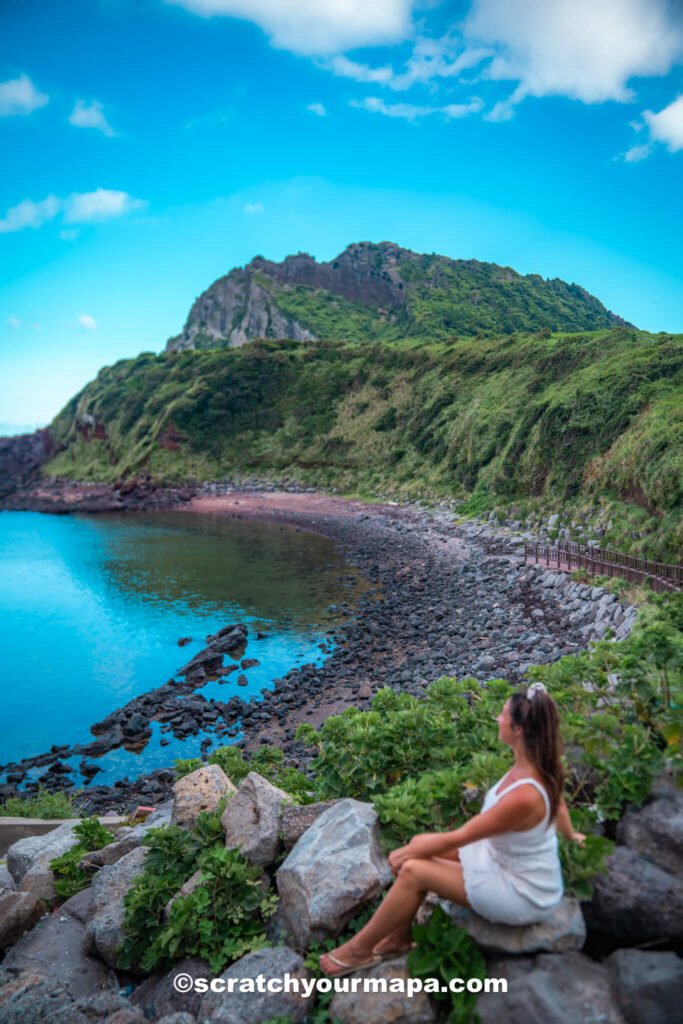
Seongsan Ilchulbong (Sunrise Peak): A UNESCO World Heritage Site famous for its sunrise viewpoints and dramatic volcanic formation.
Manjanggul Cave: One of the world’s longest lava tubes with impressive natural structures and a cool subterranean atmosphere.
Jeongbang Waterfall: A powerful waterfall that drops directly into the ocean, making it one of the most unique waterfalls in Asia.
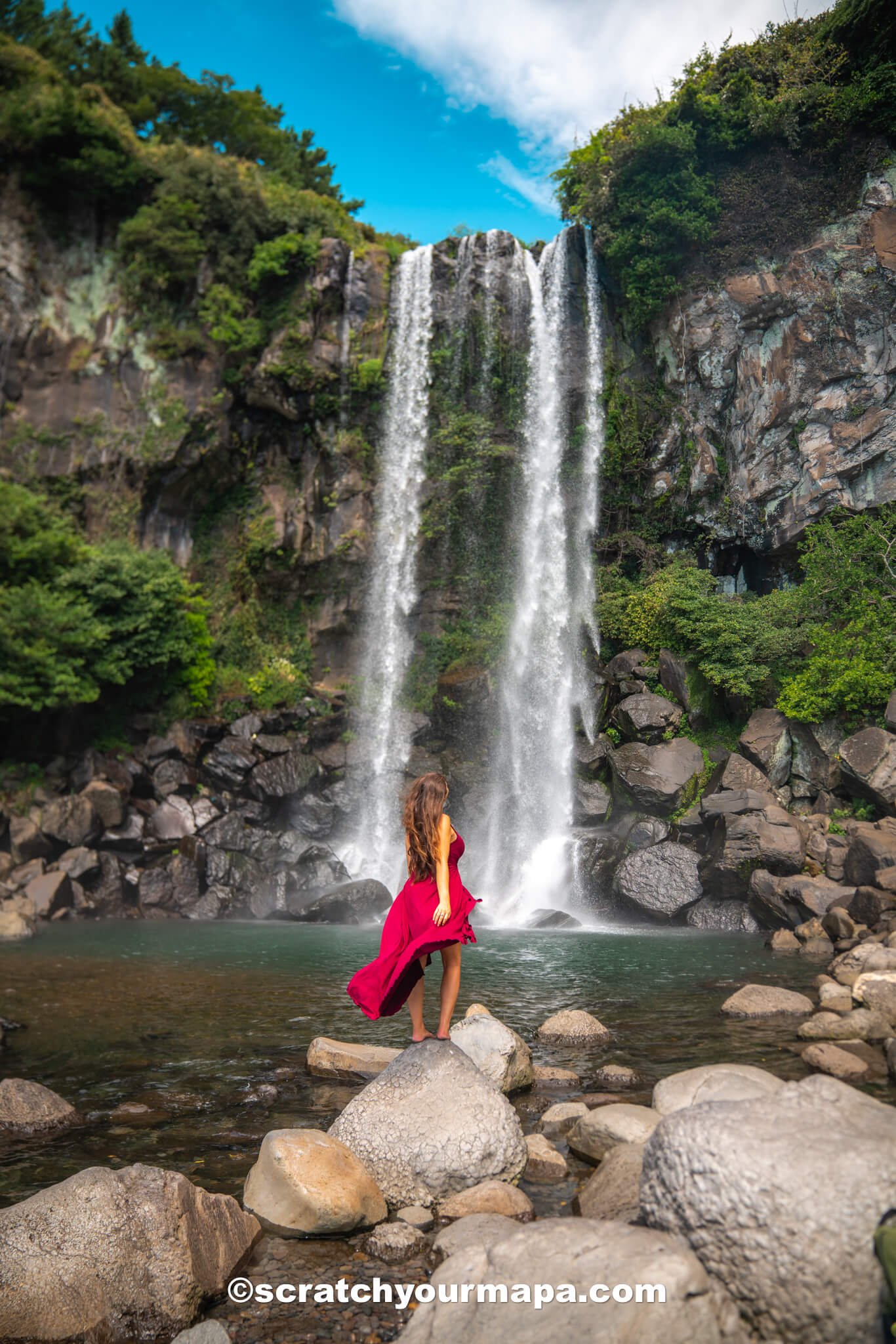
Cheonjiyeon Waterfall: A peaceful waterfall surrounded by lush forest and easy walking paths.
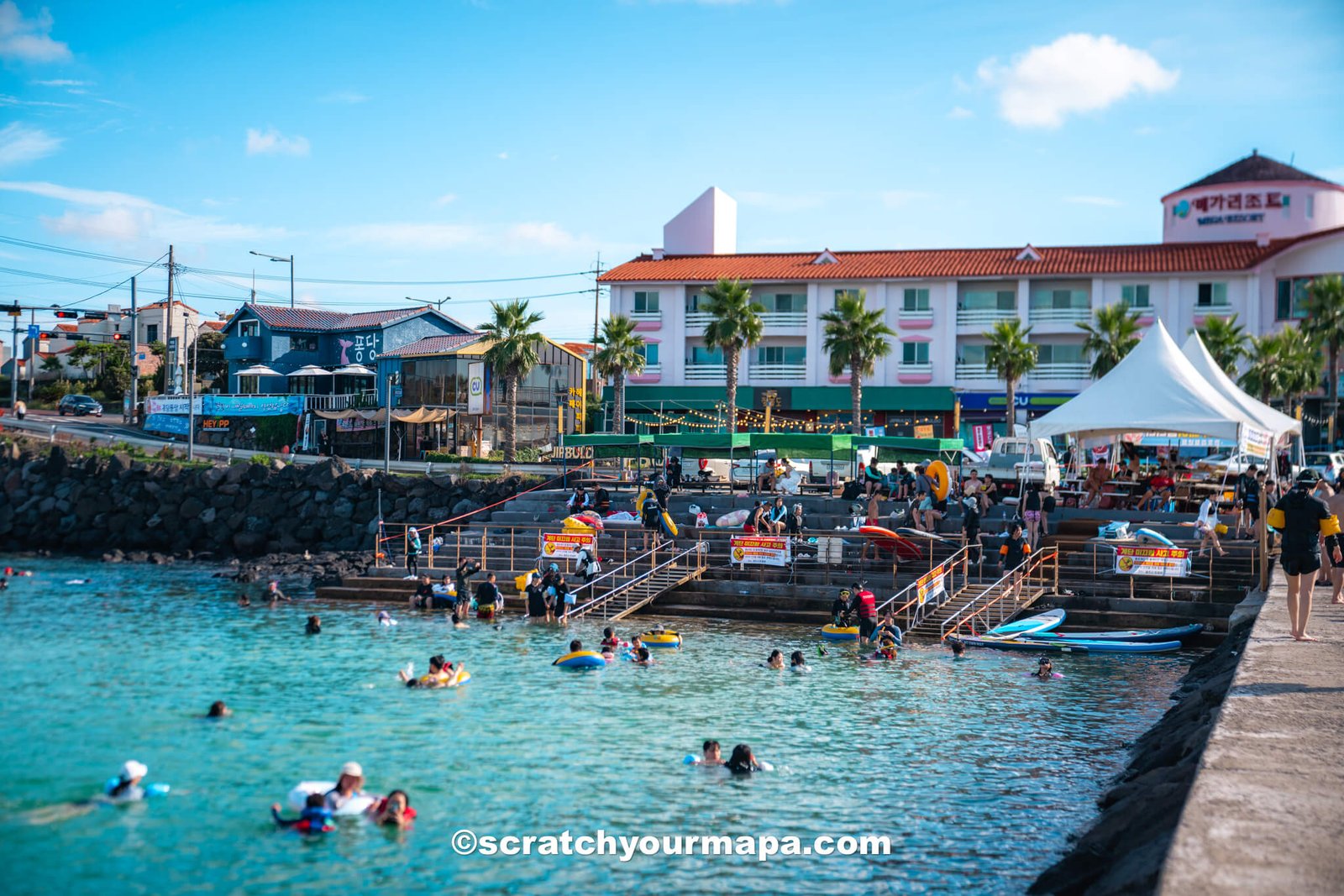
Hamdeok Beach: A beautiful beach with white sand and bright turquoise water, perfect for swimming and photography.
Hyeopjae Beach: Known for shallow blue waters and views of nearby Biyangdo Island.
O’Sulloc Tea Museum: A popular stop with green tea fields, tea exhibits, and matcha desserts.
Spirited Garden: A quiet bonsai garden with ponds, pathways, and scenic landscaping.
Jeju Folk Village: A traditional village showcasing Jeju’s culture, historic homes, and local crafts.
⛵️ Unique Activities to Enjoy While Visiting Jeju
Jeju has plenty of one-of-a-kind activities perfect for adding fun variety to your trip.
Hike Hallasan Mountain
Walk the Olle Trails
Try a Haenyeo (female diver) experience
Relax in a Korean spa or hot spring
Visit a black-sand beach
Explore Jeju’s lava tube caves
Take a boat tour around the coast
Visit a tangerine orchard and pick local fruit
Tour the Camellia Hill gardens
🍴 Local Food and Drink in Jeju
Jeju is known for its fresh seafood, unique island specialties, and local ingredients that you won’t find anywhere else in Korea. Here are some of the top dishes you should try while on the island.
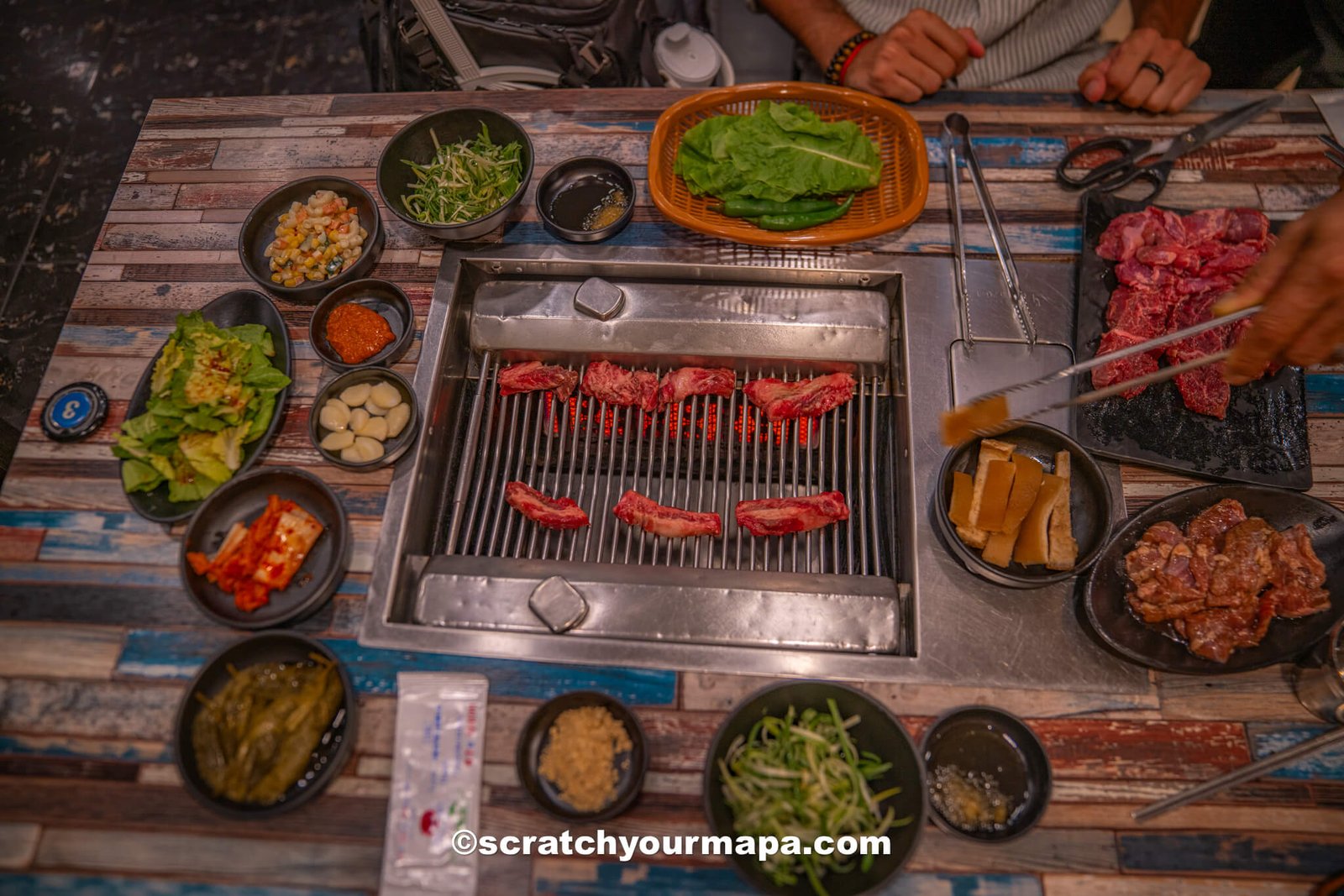
Black pork bbq
Fresh abalone
Jeju mandarin oranges
Seafood stews
Hallabong (citrus) desserts
Fresh local fish
Jeju barley beer
Green tea ice cream from O’Sulloc
Seaweed soup made with Jeju ingredients
Jeju Food Guide: What to Eat, Fun Food Tours, & the Best Restaurants in Jeju, South Korea
Explore the best flavors of South Korea’s beloved island with the best cafes, restaurants, dishes, & culinary experiences.
Visiting Jeju can feel a bit different from exploring other major Korean destinations. The island is much more spread out, and many attractions are located in rural or coastal areas. That said, getting around Jeju is still very manageable.
Here are the main ways to get around Jeju, South Korea:
Using public transportation (buses operate around the island)
Taking taxis or ride-shares
Renting a car (the most convenient option for exploring freely)
Hiring a private driver or guide for the day
Renting bikes or e-scooters in certain tourist areas
👉🏻 Want more information? Our Jeju transportation guide goes over all the details for moving around the island and helps you understand how the local bus system works.
How to Get Around Jeju: Island Transportation Guide
In this guide, we’ll break down exactly how to get around Jeju, comparing transportation options and giving helpful tips.
Now that you know how to get around and what to do, the next part of our Jeju travel guide is to help you find which area of the island to stay, as well as give a few hotel recommendations.
❣️ Which Area to Stay in Jeju
There are so many great areas to stay in Jeju, and depending on your interests and mode of transportation will depend on which area is right for you.
Jeju city is the most convenient area to stay for those on a short stay, or those that plan on getting around by public transportation. If you have a car though, we’d recommend staying in either Aewol, Seogwipo, or Hamdeok.
These are all areas that have some great nature nearby like waterfalls and beaches, but also have plenty of restaurants and areas to walk around.
🏨 Recommended Hotels in Jeju
Here are some of our carefully picked properties we have chosen for you:
$ Good Budget-Friendly Stays in Jeju
Bucket Beach House: A simple beachfront hostel with basic amenities and easy access to the coast, perfect for travelers wanting budget comfort and beach proximity on Jeju.
Hotel Mano & Dito: A cozy guesthouse offering clean rooms and a relaxed vibe, ideal for budget-conscious visitors who value quiet and affordability over luxury.
Gudeok Guesthouse: A no-frills guesthouse that provides a comfortable base at a low price, great for travelers who plan to spend their time exploring rather than staying in.
$$ Great Mid-Range Stays in Jeju
Jeju Hotel Scarboro: A boutique stay with warm interiors and sweeping ocean views, offering a peaceful cliffside atmosphere that feels uniquely Jeju.
Jeju Doldam B&B: a small guesthouse/B&B with good reviews and a homey feel; ideal for travelers who prefer charm over standard-chain uniformity.
Hotel Leo: a higher-rated boutique-hotel option that stays below full luxe-resort prices but offers nice rooms and a comfortable stay.
$$$ The Best Luxury Hotels in Jeju
The Shilla Jeju: a stunning luxury resort with sea views, top-tier facilities, a private beach area, and exceptional dining
Grand Josun Jeju: a high-end resort offering spacious rooms, beautiful pools, and one of the most comfortable luxury experiences on the island
Hidden Cliff Hotel and Nature: a peaceful forest retreat featuring panoramic views, a dramatic infinity pool, and a serene natural setting
Jeju Travel Guide: Safety
One thing we always prioritize in our guides is safety, because feeling secure makes every trip so much more enjoyable.
If you are using this Jeju travel guide to plan your trip, you will be happy to know that Jeju is considered one of the safest destinations in South Korea. The island is peaceful, welcoming, and very laid-back, which makes exploring much easier for first-time visitors.
👮🏻♀️ Is it Safe to Visit Jeju Now?
Visiting Jeju is very safe, and travelers consistently mention how comfortable they feel throughout the island. Locals are friendly and used to tourism, and crime rates are very low. Whether you are staying in Jeju City, exploring the coast, or hiking Hallasan, the environment is incredibly calm.
🌚 Is it Safe to Walk in Jeju at Night?
Jeju is generally very safe to walk at night, especially around Jeju City, Seogwipo, and the main resort areas. Many neighborhoods stay active in the evening with cafes, restaurants, and shops still open, giving the island a relaxed nighttime atmosphere.
As always, it is good to stay aware of your surroundings, but overall Jeju is a destination where most travelers (including ourselves) feel completely at ease after dark.
Jeju Travel Guide: Other Things to Know About Visiting
Now you know almost everything you need for planning your trip to Jeju, but before you wrap up this Jeju travel guide, there are a few more helpful things to keep in mind.
☀️ Weather in Jeju
Jeju has four distinct seasons, and the island feels very different depending on when you visit. Winters (December to February) are cold and windy, especially along the coast. Summers (June to August) are very hot, humid, and can be rainy.
Spring and autumn are the most pleasant, with blooming flowers in April and beautiful fall colors in late October and early November.
📆 What is the Best Month to Visit Jeju?
Spring and fall are the best times to visit Jeju. April is famous for cherry blossoms and yellow canola flowers that cover the island, while late October and early November bring mild temperatures and gorgeous autumn foliage around Hallasan and the waterfalls, as well as the iconic pink muhly.
May and September are also great months to visit Jeju as they offer good weather without big crowds or peak prices. While summer is really hot, it’s a great time to swim, and the hydrangeas are in full bloom (June-July).
Visiting Jeju is absolutely worth it, especially if you love nature. The island has waterfalls, lava tubes, beaches, scenic hikes, and peaceful countryside views that feel completely different from mainland Korea.
If you enjoy trying local foods, Jeju offer unique dishes, and truly has some of the best we’ve ever had. And if you like slow travel, Jeju’s relaxed atmosphere is perfect for unwinding.
⏳ How Many Days Are Enough for Jeju?
If you want to see the highlights, three days is the minimum you should plan for. If you want to hike Hallasan, visit multiple beaches, or explore both the east and west sides of the island, then five to seven days is ideal.
Jeju is larger than most people expect, so giving yourself extra time makes the experience much easier and more enjoyable.
Also, if you plan to move around with public transportation, you’ll need more time, and we’d recommend spending closer to a week in Jeju.
Want to save the article for later? Pin it!
👀 What’s Next?
Now that you know all of the basics for planning a trip to South Korea! In case you want to dive deeper though – there’s more.
We hope you enjoyed our Jeju travel guide! Have questions still? Feel free to drop them below in the comments.
Want to learn more about traveling around the Jeju island and other destinations in South Korea? We have several other Korean travel guides for you to check out, as well as more coming up every week. Make sure to subscribe to our newsletter for all of our weekly article updates, as well as exclusive discounts on the Scratch Your Mapa shop.
Excited about exploring the island of Jeju but don’t want the hassle of planning everything? Well, we’re here to help! Scratch Your Mapa offers customized travel planning services, finding you affordable flights, unique accommodation options, and specially-curated itineraries. Want to learn more? Grab your consultation.
Like this article? Please share it with your family and friends, so that we can continue to keep creating free travel guides for you! It takes just a second, and would mean the world to us. Thanks for being here!
To provide the best experiences, we use technologies like cookies to store and/or access device information. Consenting to these technologies will allow us to process data such as browsing behavior or unique IDs on this site. Not consenting or withdrawing consent, may adversely affect certain features and functions.
Functional
Always active
The technical storage or access is strictly necessary for the legitimate purpose of enabling the use of a specific service explicitly requested by the subscriber or user, or for the sole purpose of carrying out the transmission of a communication over an electronic communications network.
Preferences
The technical storage or access is necessary for the legitimate purpose of storing preferences that are not requested by the subscriber or user.
Statistics
The technical storage or access that is used exclusively for statistical purposes.The technical storage or access that is used exclusively for anonymous statistical purposes. Without a subpoena, voluntary compliance on the part of your Internet Service Provider, or additional records from a third party, information stored or retrieved for this purpose alone cannot usually be used to identify you.
Marketing
The technical storage or access is required to create user profiles to send advertising, or to track the user on a website or across several websites for similar marketing purposes.