

What to Do When in Madrid: Awesome Spots in the Spanish Capital
Living in Madrid for two years let me experience so much of the Spanish capital, and let me tell you, it is such a fun city! Often overshadowed by Barcelona, Madrid has plenty to offer despite being far from the coast. Here is a list of what to do when in Madrid, how to get around, and some awesome things to eat and drink.
*Please note that this blog post may contain some affiliate links, which we make a small profit on, at zero cost to you. Links are only used on products & services that we’ve used and believe in, to give you the best buying experience. Purchasing from these links helps us to continue providing free travel guides for you- so thank you for your support!
Our Travel Planning Recommendations
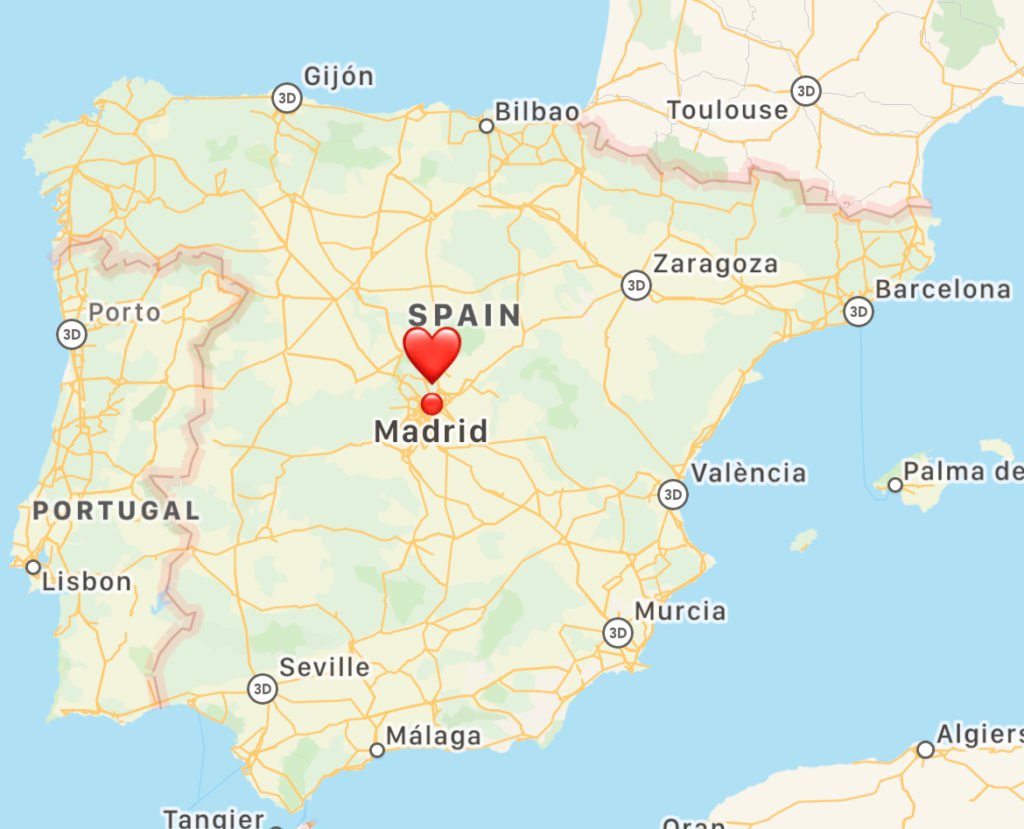
Where is Madrid in Spain?
Madrid is the capital of Spain, and located in the dead center of the country. It may not be near the coast, but it certainly is the best hub for reaching all different parts of Spain.
How to Get to Madrid
Like we said, Madrid is a huge hub- not only in Spain, but for many different places in Europe! There are a number of different ways to reach the Spanish capital, including flight, bus, train, and a few others.
Domestic Flights into Madrid
Domestic cities that fly direct to Madrid include Almeria, Alicante, Asturias, Badajoz, Barcelona, Bilbao, Bogota, Castellon de la Plan, Fuerteventura, Granada, Gran Canaria, Ibiza, Jerez, La Coruna, Lanzarote, Malaga, Palma de Mallorca, Pamplona, San Sebastian, Santander, Santiago de Compostela, Sevilla, Tenerife, Vigo,
International Flights Into Madrid
Flights that go from other European cities include Amsterdam, Athens, Balice, Bari, Berlin, Berne, Blagnac, Bologna, Bordeaux, Bristol, Brussels, Bucharest, Budapest, Copenhagen, Dublin, Dusseldorf, Florence, Frankfurt, Geneva, Hamburg, Leipzig, Linz, Lisbon, London, Luqa, Lyon, Manchester, Manises, Marseille, Milan, Munich, Nantes, Naples, Nice, Nowy Dwor Mazowiecki, Paris, Pisa, Prague, Porto, Rome, Sofia, Someseni, Stockholm, Strasbourg, Tirana, Turin, Vantaa, Venice, Vienna, Warsaw, and Zurich.
Cities from the Middle East and Africa that go direct to Madrid include Beirut, Cairo, Casablanca, Dakar, Doha, Dubai, Hassi Messaoud, Jeddah, Luanda, Malabo, Marrakech, Rabat, Tangier, and Tel Aviv. In addition, Shanghai flies there.
Cities that fly to Madrid from the Americas include Bogota, Boston, Buenos Aires, Cali, Cartagena, Comayagua, Dallas, Guayaquil, Havana, Lima, Los Angeles, Mexico City, Miami, Montevideo, Newark, New York, Panama City, Philadelphia, Punta Cana, Punta Caucedo, Rio de Janeiro, Salvador, San Jose, San Pedro Sula, San Salvador, Santa Cruz, Santiago, Sao Paulo, and St Johns.
Flight Tip: Using Skyscanner you can use the calendar to check and see which are the cheapest dates for flying to Madrid!
Search for a flight to Madrid:
How to Get to Madrid City Center From the Airport
The international airport is located about 40 minutes away from the city. You can reach the city by train (Renfe), metro, or bus. If you are looking to get to the center, the easiest way is to hop on the Renfe, which is just a few stops away from Sol. Tickets can be purchased at the machine by using debit card or cash.
Other Option for Getting to Madrid
Madrid is well connected to all areas of Spain, so you can get around by easily hopping on a train, a flight, or even grabbing a Bla Bla Car, which is one our favorite apps to save while traveling. It is basically sharing a ride with someone who is already traveling somewhere! It’s cheaper than most trains and buses, and is very popular in Spain.
Madrid is a popular place for a layover, and it’s not uncommon for people to miss their connections. The good thing is though, that there are ways to be protected if flights have delayed or cancellations.
Entry Requirements for Spain
Depending on which country you’re from, and where you’re traveling from, will depend on your requirements for entering Spain. Here we are going to cover what you need to know for visiting the country of Spain (both visa and covid-wise).
Visa Requirements for Spain
There are many nationalities that can enter Spain visa-free. Travelers from the EU, Switzerland, Norway, Liechtenstein, and Iceland can all enter without any restrictions at all, while others that don’t need a Schengen visa can visit for up to 90 days within a 180 day period.
The 90/180 Rule
It’s important to note that these 90 days are for all countries in the Schengen area. For example, if you spend 10 days in Italy (which is also part of the EU), you will then only be able to spend a total of 80 days in Spain within that 180 day period.
We use the Schengen visa calculator, which is extremely helpful for those that are planning on traveling in and out of the EU for a long period of time.
Schengen Visas
For those of you that plan on staying longer, or for those of you who are from a country that doesn’t get visa-free access, you will need to in fact apply for a Schengen Visa. Make sure to check the list of countries that need to get a Schengen Visa before traveling.
Local Adjustments for Madrid, Spain
Whenever you are traveling there are things that you may forget about. These may be different from where you are coming from. Here are a few of the local adjustments to keep in mind while traveling to Spain.
🗣️ Official Language in Madrid
The official language in Spain is Spanish. Just like there is a difference between English is the US and English in the UK, the same goes for Spain and other Spanish speaking countries.
Some things to note about the Spanish in Spain is that there are some different pronunciations. The C and Z are pronounced with a “th” sound, which can be particularly confusing for those that learn Spanish from Latin America.
Spanish people are quite proud, and always prefer if you at least try to speak Spanish to them. We suggest learning some of the basics so that you can better communicate with the locals. That being said, Madrid is the capital, so you will always find people that speak English as well.
💶 Currency Used in Spain
The currency used in Spain is the same as most of Europe, which is the euro. Most places takes credit card, so you won’t need to have too much cash on you, unless you are taking bus or want to buy from a street vendor.
🔌 Electrical Outlets in Spain
Spain uses the same plug types as the rest of Europe, which are types C, E, & F. The standard voltage in Spain is 220 V and the standard frequency is 50 Hz. If you are coming from the US, make sure to buy an adapter that is also an energy converter, so you don’t blow out your electronics.
🚰 Is the Water Safe to Drink in Madrid?
When you go to restaurants you will hardly ever receive tap water. This is customary in many places in Europe. However, the water is totally safe to drink, so we suggest bringing a refillable water bottle to fill up from the tap.
💸 Tipping Culture in Spain
The tipping culture in Spain is pretty much inexistent. If you are traveling in Madrid it is not common to tip, unless it is a very nice restaurant, or excellent service, in which people will leave one or two euros.
What to Do When in Madrid: Activities
Madrid is such a big city, and there are so many things to keep you entertained! Here are some ideas for what to do when in Madrid when it comes to different activities.
What to Do When in Madrid: Spanish Food & Drinks
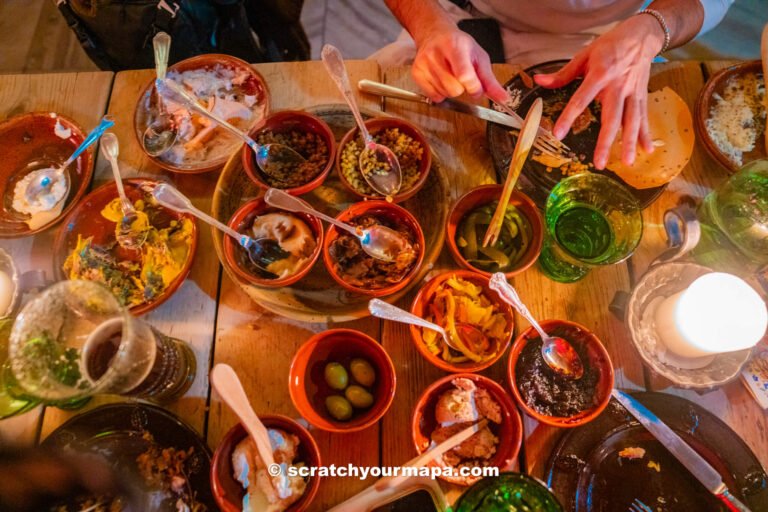
I could dedicate multiple articles to food & drinks in Madrid. In my opinion, one of the best things to do in Madrid is to explore the many awesome restaurants and bars. Actually, when people used to visit me, we pretty much ate and drank all day because the food and drink scene in the capital has so much to offer!
What Foods to Try
First things first- what to have? Here are just a few dishes we think you should try while in Madrid, or any part of Spain for that matter.
The Best Things to Do in Madrid: Nightlife
When it comes to nightlife, Madrid is seriously one of the greatest. One of the best things to do in Madrid is to simply have a night out and party til the sun comes up.
Not only are there a huge variety of bars and clubs, but there are also several different areas with concentrations of great nightlife.
The Different Neighborhoods to Go Out in Madrid
There are a ton of different choices when it comes to partying Madrid. Here are a few different areas that are popular.
Sol
Sol is the most famous touristy area when it comes to going out. Right off the main plaza there are plenty of bars and smaller clubs all lined up, with promoters usually standing outside offering a free shot if you go inside.
These places are hit or miss, as sometimes they can be pretty dead, but other nights they can randomly become packed. I personally liked coming here to go to Dubliner, which is an Irish pub that is big for watching games (and one of the only that you can watch American football).

Sol is home to some of the best things to do in Madrid.
La Latina
This is personally my favorite area to go out. On any given night there are plenty of bars lined up where you can hop from one to the next, but the best time to go out in La Latina is for Sunday Funday. The place truly comes alive after lunch time, and the neighborhood becomes packed. Bars close at 2, and then there are a couple of nearby clubs for the night owls.

La Latina is located just a few minute walk from Plaza Mayor, and has plenty of bars and restaurants.
Malasaña
Malasaña is considered the more “hipster” area of Madrid. Here you can find really cool and quirky bars. There aren’t so many night clubs, but mostly larger bars, which close around 4:00 am.
Chueca
Chueca is the gay neighborhood of Madrid, and if you’re looking for a wild night, this just may be your place. This area of the city can get pretty crazy, but has only the best party vibes.
Tribunal
This area is nice because it catches more locals, but is still close enough to walk from a lot of the more touristy areas. This area has quite a few great clubs, as well as a good amount of bars. You can always bar hop in Malasaña, and then head to one of the clubs in Tribunal to continue your night.
What to Do When in Madrid: Top Night Clubs
Night clubs in Madrid are not like clubs everywhere else. Don’t even think of going to a club before 3 am because it’ll be completely empty. Most clubs stay open til 6 or 7, and then there are the “after party” spots which can go well into the middle of the next day! Here are just a few popular ones.
Kapital
This is the biggest and most popular club in Madrid for tourists. The massive venue boasts 7 stories, each one with a different style of music, making it great for everyone! Kapital can attract more of a younger crowd, and lines can be pretty long, but it is definitely something to experience.
Fabrik
Fabrik is one of the most interesting spots in Madrid. Due to it actually being located outside the center of the city, it’s not the easiest to get to, so it’s actually much more popular with the locals. Famous DJs sometimes play here, and there are multiple rooms, with mostly electronic music.
Sundays they do huge day parties, where there are younger crowds of people drinking in the parking lots early in the morning, then entering the club midday, and partying through the night. If you like intense scenes, than this is the place for you.
Joy Eslava
Joy Eslava is a club that is a large open space, with a giant dance floor in the middle, VIP couches on the side, and stairs going up to balconies overlooking the club. This is a very popular venue for tourists and students, as they have different deals and many promoters on the streets bringing people in.
Ocho y Media
Ocho y Media is an interesting club because it’s one of the clubs in Madrid that has more of a rock and indie mix. There are plenty of concerts here as well, and a variety of a crowd.
Akua Terraza Lounge
This is a summertime favorite, as this huge venue is mostly outside, and features a huge pool, different dance floors, and cabanas, making it a super chic and fun night out.
La Riviera
This nightclub is named for it being located along the river banks. This is one of the best music scenes in Madrid, and hosts plenty of concerts.
Shoko
If you’re doing a Sunday Funday in La Latina and want to keep the party going, Shoko is the place to go. This is one of the most popular clubs in the area, and walking distance from all of the bars in La Latina.
Sala Cool
Sala Cool is home to one of the most popular parties in Madrid called Fucking Mondays. This is particularly popular with a younger crowd, and has 3 floors featuring commercial music, latin music, and beer pong.
Gabana
There isn’t anything particularly special about Gabana, but it is just a place that I felt I needed to add as it is a very popular night club, and is just a great night out with a variety of music.
Unique Bars
There are so many cool places to visit in Madrid that we could definitely do a separate article for this, but we will just name a few of our favorites.
Circulo de Bellas Artes
Another great rooftop is at Bellas Artes, located right between Gran Via and Cibeles. Due to its great location, it gives you views of both areas, two of the most iconic spots in Madrid.
El Chapandaz
We absolutely love this bar because it is made to look like it is out of a cave, and there is its famous drink “leche de pantera”, (which translates to panther’s milk) that pours from the ceiling. Not to mention, they have huge cocktails with long straws, making for a truly instagrammable experience.
Bar Hawaiano
We love bar Hawaiano due to its unique cocktails that are served in a variety of different objects such as giant turtles, volcanoes, and coconuts. They come with long colorful straws and an array of snacks to top everything off.
What to Do When in Madrid: Day Trips From the City
Being that Madrid is right in the center of the country, it is the perfect place to begin or finish traveling through Spain. If you are only staying in Madrid though, and would like to see some nearby places, here are a few great ones.
Segovia
This gorgeous city is just a quick hop on the train from the center! Take the Ave (fast train) from Chamartin, and you’ll be there in just 25 minutes. Segovia is also just an hour by car, if you wanted to get a BlablaCar.
This ancient city is characterized by a fairy-tale castle, and a beautiful aqueduct across the border, that is estimated to date all the way back to 50 AD!
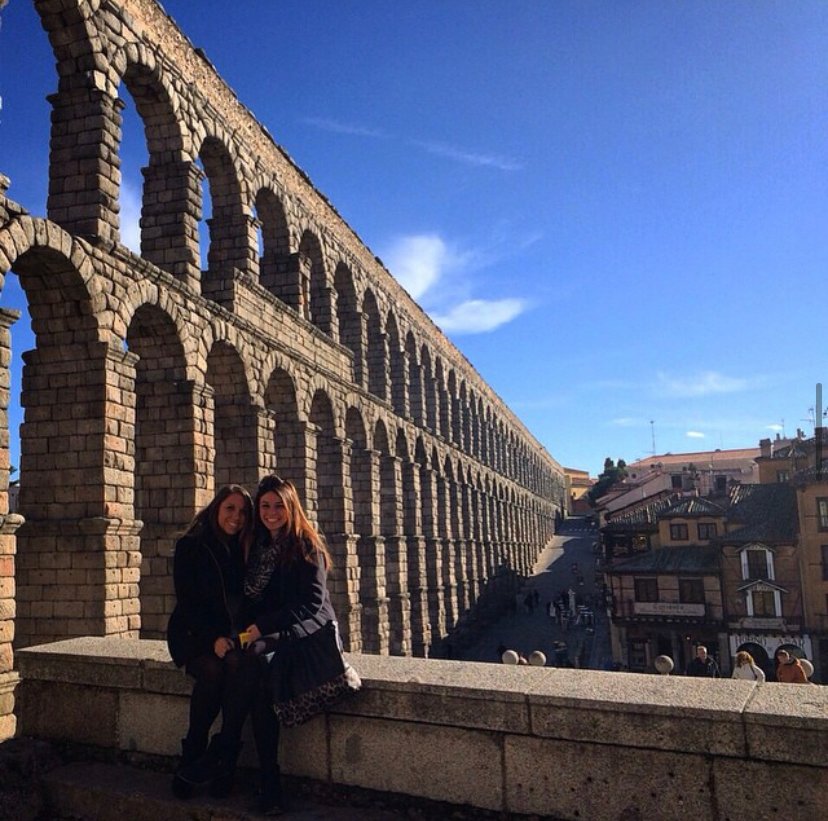
Segovia is one of the best day trips from Madrid.
Toledo
Located just an hour south of Madrid, this ancient city is set on a hill above the plains of Castilla-La Mancha. The medieval town is the perfect escape from the hustle and bustle of the capital, but definitely has enough to do to spend a day or half day.
Just hop on the Renfe Cecanias to get there in an hour, or spring for the high speed train for just a few more euros, and get there in just a half hour.
El Escorial
El Escorial is an adorable little town that is located just an hour from the city on the Renfe Cercanias. Take a 10 minute stroll into town and explore the beautiful monastery, or grab a bite at one of the cute restaurants with outdoor seating.
La Sigüenza
Looking for another getaway to see some local castles? Head to La Sigüenza for its fairytale castle and the fortress-like Sigüenza Cathedral which features Romanesque elements and a rose window. Take the train from Chamartin and arrive in an hour and a 1/2.
El Yelmo
Looking to get out of the city and enjoy nature? El Yelmo is a mountain outside the city that makes the perfect day trip for some hiking, and dipping in the refreshing waters of the river. The loop is 5 1/2 miles roundtrip, and can be accessed by the bus 724 from Intercambiador de la Castilla.
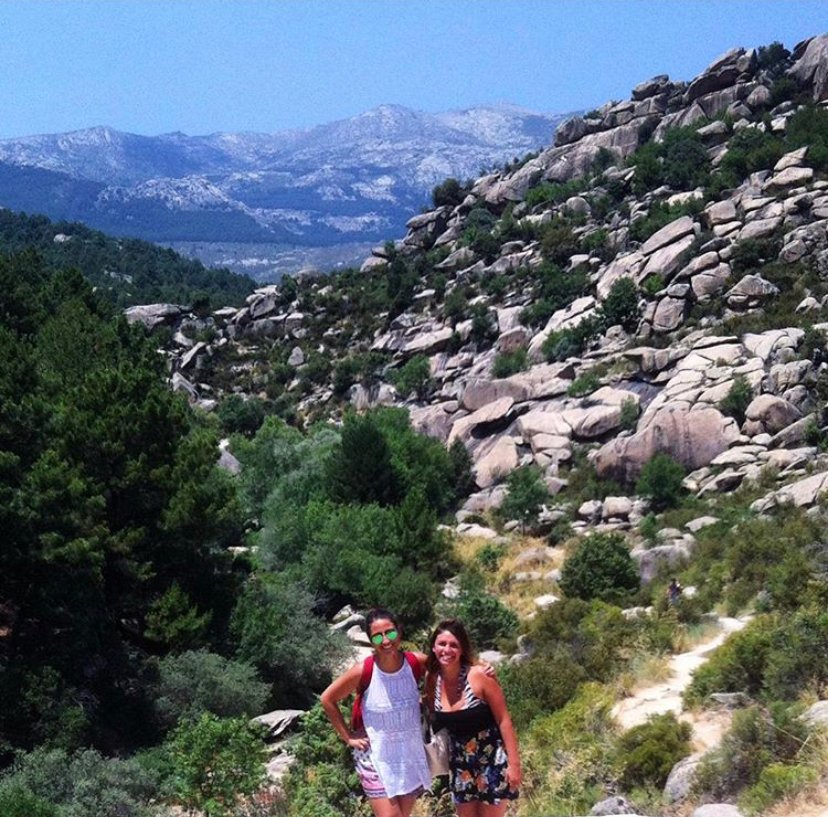
El Yelmo is a great place to hike outside of Madrid
What to Do When in Madrid: Getting Around
When it comes to getting around it is super easy in this city! The public transportation system is very easy to use, and affordable. Here’s a little bit more info about different options for what to do when in Madrid for transportation.
Getting Around Madrid By Foot
We absolutely love seeing cities by foot, as there is always something to see around every corner! Madrid is a pretty big city, but you can definitely do most of it by foot if you enjoy walking. If you’re feeling tired, there are always plenty of Metro stops, where you can hop on quickly to get to your destination as well.
Getting Around Madrid by Metro
The metro is what we suggest to use 90% of the time while traveling in the city of Madrid. It is the easiest way to get around, and is maintained very well. The lines are organized by color and number, making it easy for anyone to understand.
Fares are very reasonable, and only increase slightly when going to further zones. If you are planning on visiting many areas, it is better to get the 10 ride option, but if you plan on staying mostly in the center, it is easier to buy each ticket ride by ride.
Getting Around Madrid by Bus
Buses are the same fare as the metro, as the price depends on the district you are traveling through. They are rarely needed, but are more often used for reaching areas outside the center of the city.
Getting Around Madrid by Renfe Cercanias
The Renfe Cercanias is the regular train that runs throughout Madrid. This is usually used when reaching neighborhoods outside the center of the city, and is always connected to a regular metro, just in a different area of the station. The most popular stations that have the renfe are Sol and Atocha.
Getting Around Madrid by Uber/ Taxi
We would say this should be your very last option, as public transportation can almost always get you there quicker! The only exception is late at night when the metro closes (between 1 and 2 am), and when buses become very infrequent. Taxis are usually metered, and ubers are definitely a little cheaper than a taxi.
Getting Around Madrid by Scooter
One of the newer additions to transportation options in Madrid is renting an electric scooter. There are plenty lying around town that you can just pick up and charge on your credit card just like Uber. This is a super fun way to get around if you want to go somewhere a bit faster without taking public trasnprotation.
Renting a Car in Madrid
While you’re exploring the inside of Madrid, you really won’t need a car. However, if you decide to visit the outskirts or do some day trips, then renting a car is definitely not a bad idea! You can easily do so from the airport, or inside the city.
What to Do When in Madrid: Where to Stay
When it comes to where to stay, there are just so many options. If you’d like something a little more upscale you can check out the hotels lined along Gran Via or Serrano. If you’d like to be near a lot of the parties and good dining options a good option would be to check for something near La Latina or Plaza Mayor.

The center has so many great neighborhoods to stay that are close to the best things to do in Madrid.
Some other great neighborhoods that are just a short walk from the very center include Plaza de España, Tribunal, and Malasaña. You can find everything from hostels to fancy hotels, and everything in between.
Is Madrid Safe?
Living in Madrid for two years I really learned a lot in terms of safety. Coming from a small town in New Jersey, I grew up in a bit of a bubble, where everything is super safe.
Unfortunately, Madrid is a big city, and doesn’t have the same safety you’d find in a country like Croatia for example. It isn’t by any means super dangerous, but you do need to keep an eye out for your belongings (like most other big European cities)
You shouldn’t be worried about having someone coming up to you to take your wallet, but if you leave it somewhere, chances are you won’t have someone trying to return it to you. Overall Spain is a safe country, but just be cautious while traveling in larger cities.
It’s also important to note that the hostel scene is changing. On our most recent visit, we stayed in a room with 16 beds, and got our GoPro stolen. The staff told us it’s becoming more common, so you’re better off in rooms with less beds or a private room.
Other Things to Know about Visiting Madrid
Now you know almost everything you need to know about visiting the Spanish capital, from what to do when in Madrid, to how to get around. But don’t go anywhere yet! Here are a few other things to know.
📆 The Best Time to Visit Madrid
Madrid is a destination that is visited year round. Like New York though, it is the one destination that we don’t particularly recommend during the summer.
In summer, all the locals escape to the beach and go on vacation. Many things are closed, and the vibe is different. Not to mention, it is unbearably hot! Spring and Autumn have beautiful temperatures, and still experience plenty of sunshine, as well as a lot of hours of sunlight (the sun sets around 9:00 pm)
Winter in Madrid is super nice during the holiday season, so we also enjoy visiting Madrid in December. Our personal favorite months to visit are September and May.
☀️ Weather & Packing
Madrid experiences 4 seasons, with very hot summers, and pretty cold winters. You’ll hardly ever see snow though. In Spain the days are longer than other areas in Europe, and are definitely warmer than the northern countries. Make sure to bring comfortable shoes to walk around, and nice clothes to go out at night.
🧳 Packing List for Visiting Madrid:
- Reusable Water Bottle (we use this water bottle from Cafago because it holds the temperature)
- Comfortable Shoes for exploring
- Zippered Bag or Backpack to secure your belongings – take a look at these backpacks for travelers!
- Power Bank (we use Anker power banks, as they are super long lasting and sturdy)
- Nice clothes to go out in (some places have a dress code)
- Travel Adapter (we use Tessan travel adapters as they are affordable and reliable)
Madrid is a big city, and has an endless amount of things to do! We suggest spending a weekend and choosing some of your favorites on our list, but you can easily spend a week with all that the capital has to offer!
Traveling to other cities in Europe? We have a ton of other European City Guides for you to check out, as well as destinations throughout the country like Barcelona, Sevilla, Costa Blanca, and the Canary Islands.
Need help planning your next trip? With Scratch Your Mapa Travel Planning we can help you explore more, and spend less! Want to learn how? Take a look at our different travel planning packages or simply drop us an email for your free consultation.

Here are some other articles you’ll love:


Like this article? Please share it with your family and friends, so that we can continue to keep creating free travel guides for you! It takes just a second, and would mean the world to us. Thanks for being here!